4 min read
Eight rules for video chatting with strangers safely
Most people you meet on a video chat with strangers are there for the same reason you are: to talk to someone new for a few minutes. A small number are not, and you usually can't tell which is which in the first few seconds.
You don't need to be suspicious of everyone. You need a few habits that hold up when you meet the wrong person. These are the eight we would give a friend before their first video call with strangers.
1. Check what your camera sees
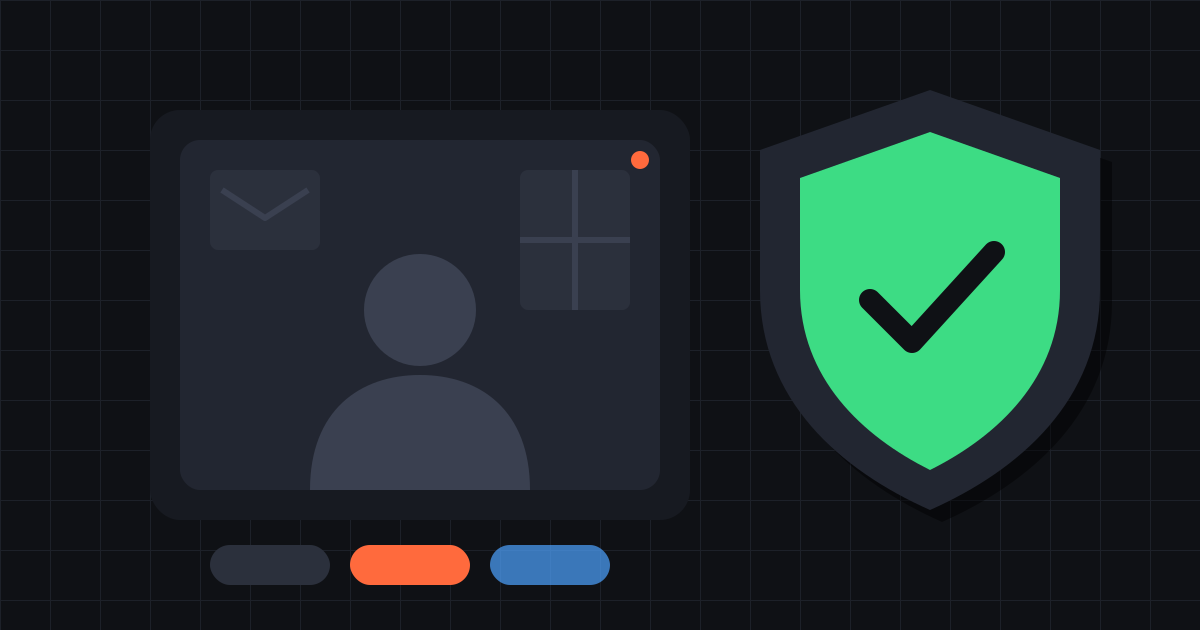
Before you press start, look at your own preview as if you were the stranger. Your face is only part of the picture.
Things that identify people more often than they expect:
- Post, parcels or documents with your name or address.
- A view out of the window that someone local could recognise.
- Photos on the wall, a school or work uniform, a lanyard or a name badge.
- A screen behind you showing messages, notifications or an open account.
2. Keep your details out of the conversation
Your surname, your street, your school, your employer and your social media handles are worth keeping to yourself, however well the conversation is going. A first name and a country is plenty for a chat that may last five minutes.
The person on the other side has no account and no profile on Stranger, and neither do you. That works in your favour. Don't undo it by handing over the details that an account would have held.
3. Assume the call is being recorded
Anyone can record their screen, and no website can detect or block that. When you video chat with strangers, the safest assumption is that every call is being saved by the other side.
A simple test before you do or say anything on camera: would you be upset if it ended up online with your face attached? If yes, don't.
4. Know what sextortion looks like
Sextortion is the most common serious scam on video chat. It usually follows the same pattern. Someone is friendly and flattering, the conversation turns sexual, you are persuaded to undress or do something on camera, and shortly after you get a message with a clip and a demand for money.
If it happens, don't pay. Paying rarely ends it and usually leads to a second demand. Stop replying, keep screenshots of the messages and the account names, and report it to the police. You are the victim, not the one who did something wrong.
StopNCII.org helps adults stop intimate images from spreading on major platforms. If the images show someone under 18, use Take It Down (takeitdown.ncmec.org).
5. Be wary of "let's move to another app"
A stranger asking to continue on Snapchat, Instagram, WhatsApp or Telegram is not always up to something. It is, however, how many scams start, because a username or a phone number is far more personal than a random match.
If you really want to keep in touch with someone, take your time. Talk again another day. A person with good intentions will not mind waiting.
6. Use the 18+ switch the way you want
Stranger is for adults only, and the 18+ switch beside the video starts on. With it on, nothing is blurred and you can be matched with people showing nudity.
Turn it off and your match's video stays blurred until our nudity detection has rated it clean, and you are only matched with people whose video has already passed. Detection checks a frame every two seconds and can miss things, so it reduces surprises rather than ruling them out.
7. Leave early, without explaining
You don't owe a stranger a reason. If a video call feels off, press Esc or Next to get a new match, or Stop to end the chat completely. The other person gets a new match too.
Leaving early is not rude on a random video chat. It is how the format is meant to work.
8. Report what crosses the line
The Report button reports your current match and moves you on to someone else. Moderators can review the recording of that conversation and act on it. Conversations are recorded on our server for moderation and deleted after 30 days, as the privacy page explains.
If you get in touch with us later, include the date and roughly what time it happened, so we can find it. If anyone is in immediate danger, contact your local emergency services first. The safety page has the rest of our advice.